Click on the image for FULL RES |
||||
| Name / Constellation | IC 10 |
Other: UGC 192 | Cas |
|
| Coordinates | AR: 00h 20m 23.1s, +59° 17′ 34″ | |||
| Optics | Officina Stellare 10" f8 Richtey-Cretien | |||
| Camera-Mount | PLAYERONE POSEIDON M-PRO - ZWO ASI 1600M (ONAG)- 10Micron GM2000 QCI Mount | |||
| Filters | Antlia V-Pro LRGB | |||
| Exposure |
|
|
|
|
| Location / Date | Promiod (Valle D'Aosta-Italy) "TLP" Remote Observatory - Oct 2024 | |||
| Seeing | 2.7" @ 1.17 arcosec/pixel binning 3 | |||
| Note | Drizzle 2X in postprocessing (Pixinsight)) | |||
| Acquisition | N.I.N.A. | |||
| Processing | Adobe Photoshop CC -  |
|||
| Comment |
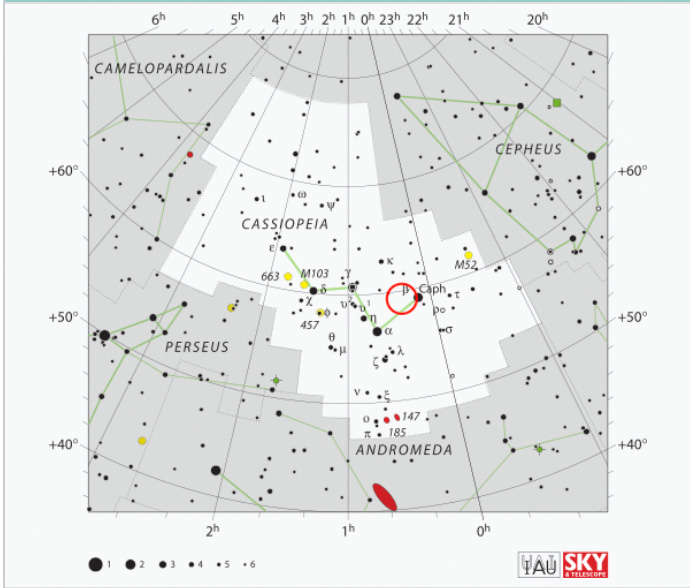
IC 10 is a dwarf galaxy visible in the constellation of Cassiopeia. IC 10 is located at the same distance as the Triangulum Galaxy with respect to the Andromeda Galaxy: this may suggest that it is a galaxy belonging to the subgroup of the latter. It is the only starburst galaxy within the Local Group; has a remarkable density of Wolf-Rayet stars, compared to the Magellanic Clouds (in this respect it can be said that it is smaller than the Small Magellanic Cloud, although its absolute magnitude is comparable to that of the latter). The high level of oxygen in the galaxy, compared to that of the Small Magellanic Cloud, suggests that star formation activity has continued for a longer period of time, and is still continuing at a reasonable rate, since over 50,000 stars are formed within it each year. Ionized hydrogen (H II regions) are very extensive, particularly towards the center.
|
|||