Click on the image for FULL RES |
||||
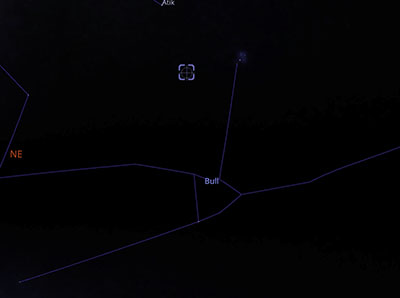
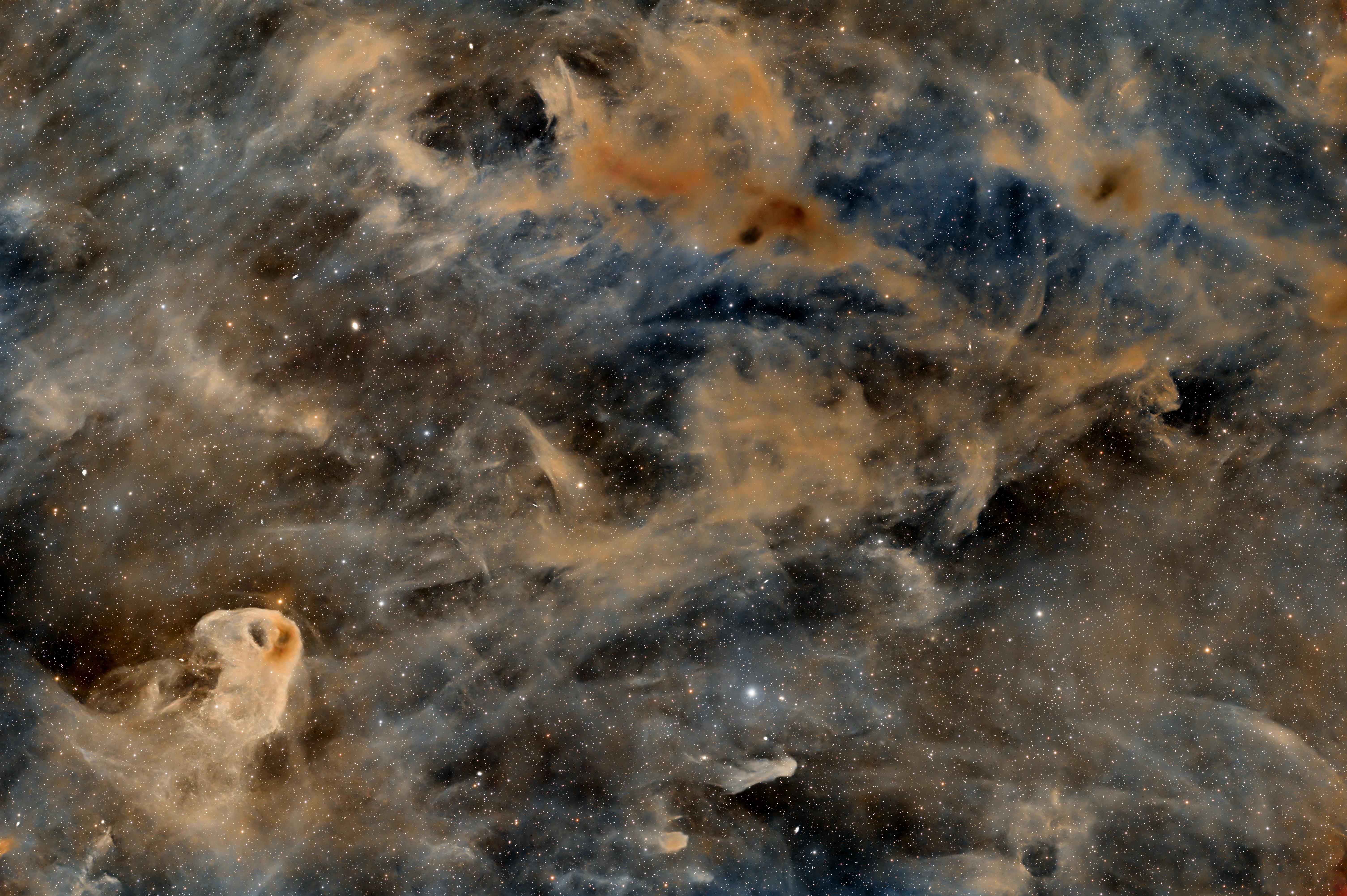
| Name / Constellation | LBN 777 |
Other: Barnard 207; Baby Eagle Nebula | Tau |
|
| Coordinates | AR: 04 06’ 26” - Dec: 26° 28’ 23” | |||
| Optics | Takahashi FSQ 106N APO Fluorite F5 | |||
| Camera-Mount | ZWO ASI 2400 MC Pro - ZWO ASI174Mini Guider (OAG)- 10Micron GM2000 QCI Mount | |||
| Filters | IDAS LPS-D3 | |||
| Exposure |
|
|||
| Location / Date | Promiod (Valle D'Aosta-Italy) "TLP" Remote Observatory - Dec 2025 | |||
| Seeing | About 3" @ 2.3 arcosec/pixel unbinned | |||
| Note | ||||
| Acquisition | NINA | |||
| Processing | Adobe Photoshop -  |
|||
| Comment |
The LBN 777 is rarely imaged, also known as Vulture Head Nebula. This nebula is part of the Taurus Molecular Cloud. These giant molecular clouds consist of cosmic dust and molecular gas, with an average density of 100-1000 particles per cubic cm. These clouds are dark, not very dense and cold as well. The clouds can loose their gravitational balance quite easy due to some gravitational impact. That time their material can condense forming into small dense parts, called Bok globules. These globules keep getting more and more dense with increasing temperature, therefore new stars - and their planets - born from their material.
|
|||