Click on the image for FULL RES |
||||
| Name / Constellation | NGC 1499 |
Other: Sh2-220, LBN 756 | Per |
|
| Coordinates | AR: 04h 03m 18s - Dec: 36° 25′ 18″ | |||
| Optics | Takahashi FSQ 106N APO Fluorite F5 - 60/220 guiding refractor | |||
| Camera-Mount | ZWO ASI 2400 MC Pro - Orion StarShot Guider - 10Micron GM2000 QCI Mount | |||
| Filters | Askar Magic D1 Dual Band Ha-O3 | |||
| Exposure |
|
|||
| Location / Date | Promiod (Valle D'Aosta-Italy) "TLP" Remote Observatory - Sept 2025 | |||
| Seeing | About 2" @ 2.3 arcosec/pixel unbinned | |||
| Note | HOO Palette | |||
| Acquisition | NINA | |||
| Processing | Adobe Photoshop -  |
|||
| Comment |
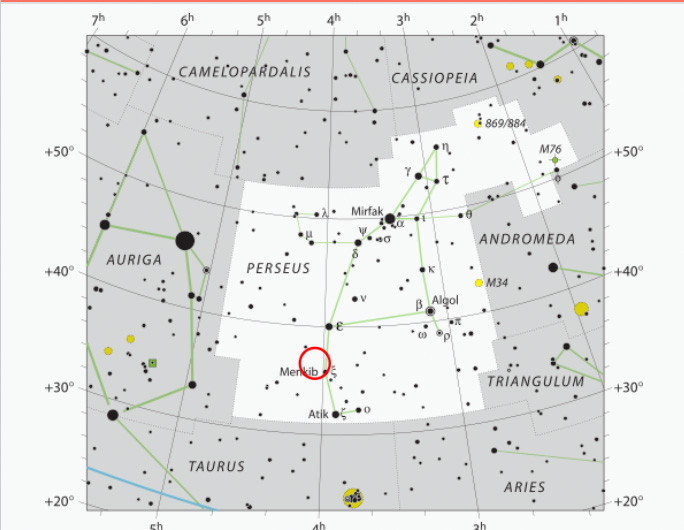
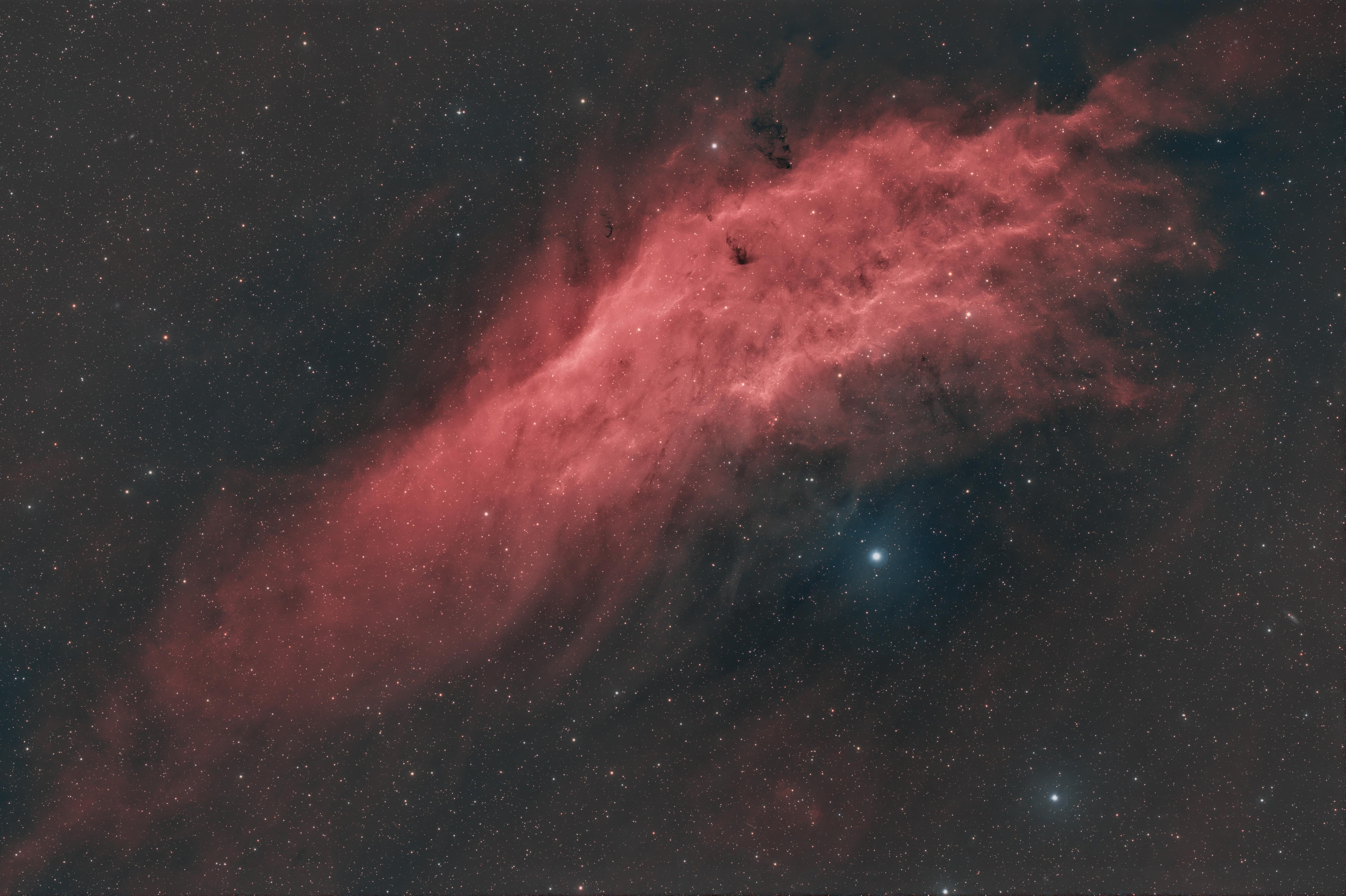
The California Nebula (also known as NGC 1499) is a visible emission nebula in the constellation of Perseus. It was discovered by Edward Emerson Barnard in 1884 and was baptized so because its shape, portrayed in long exposure photographs, recalls the US state of California. It is about 2.5° long, but it can only be observed with powerful binoculars or an amateur telescope; it is observed in the southern part of the constellation. Its distance is estimated to be about 1,000 light years from Earth.
|
|||