Click on the image for FULL RES |
||||
| Name / Constellation | NGC 2655 |
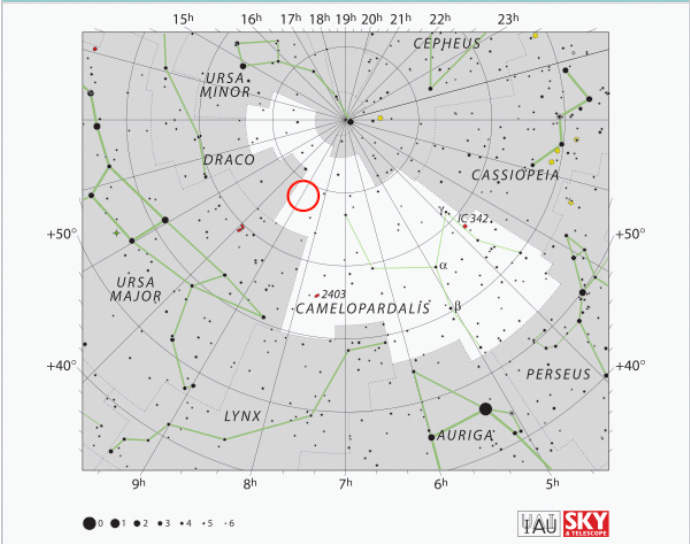
Other: Arp 225, UGC 4637, PGC 25069 | Cam |
|
| Coordinates | AR: 08h 55m 37.7s, +78° 13′ 03″ | |||
| Optics | Officina Stellare 10" f8 Richtey-Cretien | |||
| Camera-Mount | PLAYERONE POSEIDON M-PRO - ZWO ASI 1600M (ONAG)- 10Micron GM2000 QCI Mount | |||
| Filters | Antlia V-Pro LRGB | |||
| Exposure |
|
|
|
|
| Location / Date | Promiod (Valle D'Aosta-Italy) "TLP" Remote Observatory - Dic 2024 | |||
| Seeing | 2.5" @ 1.17 arcosec/pixel binning 3 | |||
| Note | Drizzle 2X in postprocessing (Pixinsight)) | |||
| Acquisition | N.I.N.A. | |||
| Processing | Adobe Photoshop CC -  |
|||
| Comment |
NGC 2655 is a lenticular galaxy located in the constellation of Camelopardalis at a distance of 63 million light years from Earth and is a member of the homonymous group of galaxies NGC 2655. It is a Seyfert galaxy, a type of galaxy with an active galactic nucleus with spectral lines characteristic for the presence of highly ionized gas. The galaxy has asymmetric dust streaks in the center, tidal arms, large amounts of neutral hydrogen gas and probably there was a recent merger event with another galaxy. Indeed, from the set of characteristics of NGC 2655, the hypothesis has been advanced that the galaxy has had various merger episodes with other galaxies. The study in the infrared band highlighted the presence of a faint central bar. A trail of gas is directed towards the nearby small galaxy UGC 4714. NGC 2655 is larger in diameter than the Milky Way, reaching about 195,000 light-years[3]. NGC 2655 is the brightest member of the NGC 2655 group that contains, among others, the galaxies NGC 2715, NGC 2591 and NGC 2748. In 2011, the supernova SN2011B was observed, a type Ia supernova with a peak magnitude of 12.8.
|
|||