Click on the image for FULL RES |
||||
| Name / Constellation | NGC 4236 |
Other: C 3, UGC 7306, MCG+12-12-004, Holm 357A, PGC 39346, H V-51, h 1163, GC 2825, CGCG 335.008, KARA 523, IRAS 12140+6947 | Dra |
|
| Coordinates | AR: 12h 16m 42,1s - Dec: +69° 27′ 45″ | |||
| Optics | Officina Stellare 10" f8 Richtey-Cretien | |||
| Camera-Mount | SBIG ST10XME -ZWO ASI 1600M Guider (ONAG)- 10Micron GM2000 QCI Mount | |||
| Filters | Astrodon Gen. II - LRGB | |||
| Exposure |
|
|
|
|
| Location / Date | Promiod (Valle D'Aosta-Italy) "TLP" Remote Observatory - Mar 2023 | |||
| Seeing | 2.9" @ 0.7 arcosec/pixel unbinned | |||
| Note | ||||
| Acquisition | N.I.N.A | |||
| Processing | Adobe Photoshop -  |
|||
| Comment |
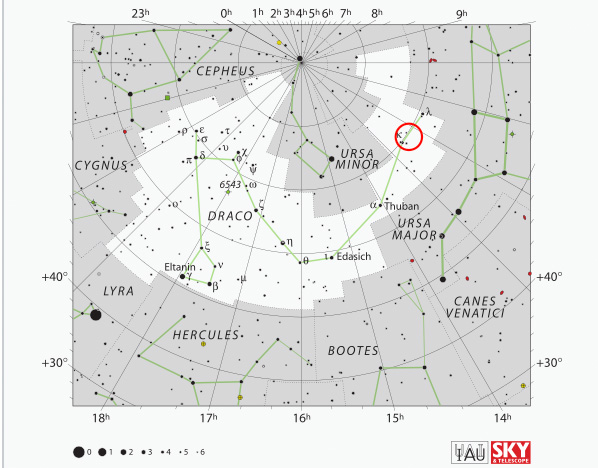
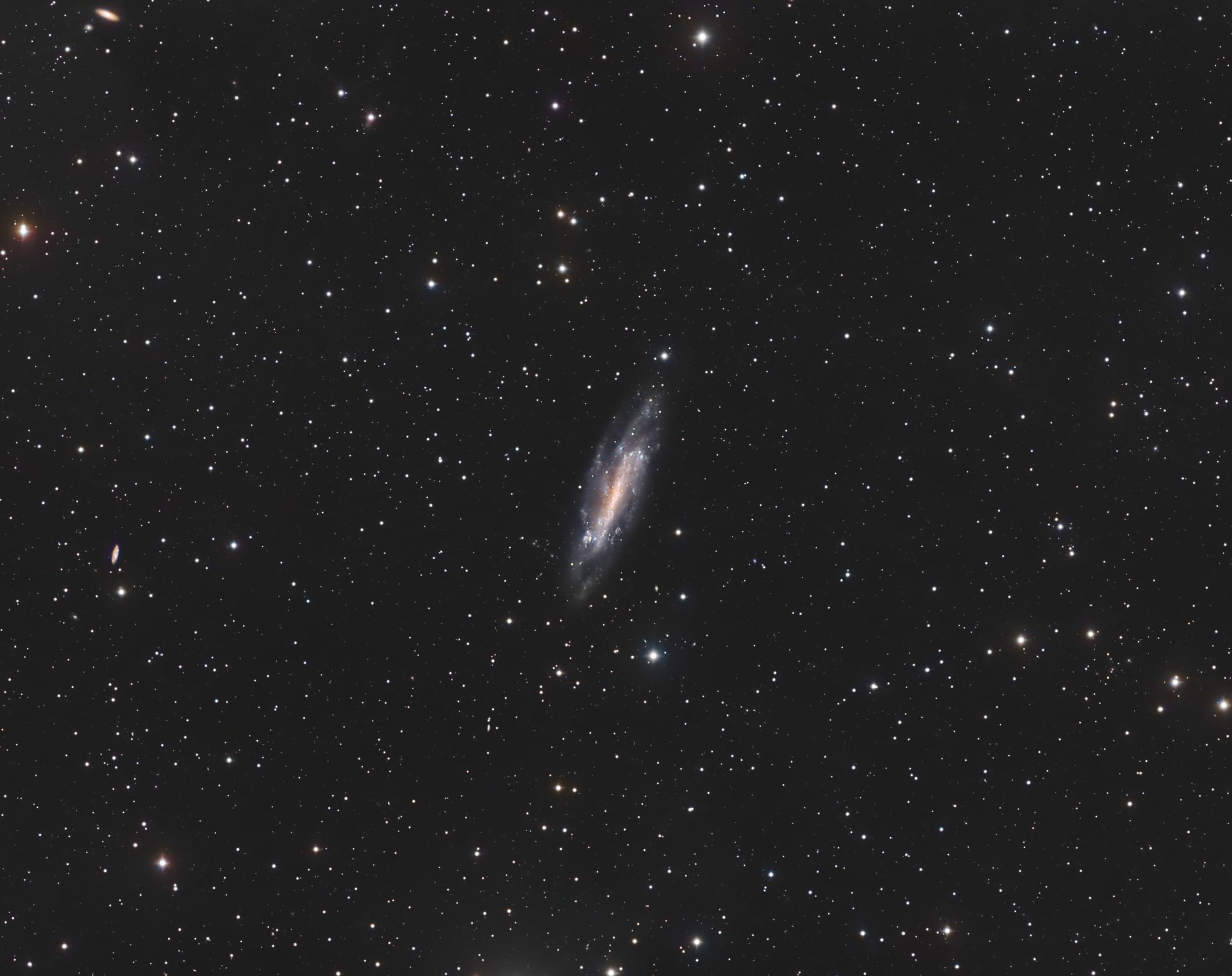
NGC 4236, (also known as C 3), is a barred spiral galaxy visible in the constellation of Draco; it is one of the closest galaxies to the Local Group. It is located just over a degree WSW of the star κ Draconis; it appears as a bright spindle elongated in a NNW-SSE direction in an amateur telescope; its most obvious feature is the clear trail of the nucleus, elongated, with a slight deformation on the north side. It is a spiral galaxy seen almost edge-on. The galaxy is located about 11 million light-years from the Milky Way, thus being in the immediate vicinity of our group of galaxies; it is part of an association of galaxies to which the two galaxies M81 and M82, observable in the constellation of Ursa Major, also belong. Radio and infrared observations suggest that its recent past has seen intense star formation, with evidence of a large number of recent supernova remnants. The galaxy is moving away from ours at a speed of about 2 km/s.
|
|||