Click on the image for FULL RES

Name / Constellation

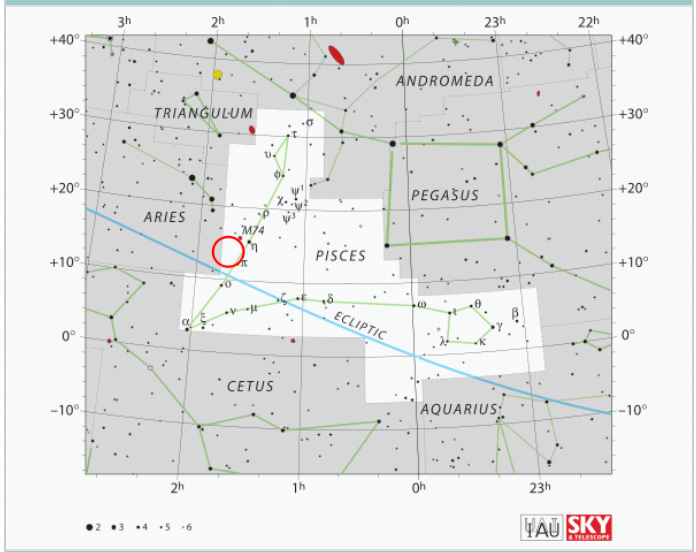
NGC 660

Other: UGC 1201, LEDA 6318, PGC 6318

Pis

Coordinates AR: 01h 43m 02.4s, +13° 38′ 42″
Optics Officina Stellare 10" f8 Richtey-Cretien
Camera-Mount PLAYERONE POSEIDON M-PRO - ZWO ASI 1600M (ONAG)- 10Micron GM2000 QCI Mount
Filters Antlia V-Pro LRGB
Exposure
  • Luminance
  • Red
  • Green
  • Blue
  • 49 x 300 sec - 4 hours 5min
  • 15 x 300 sec - 1 hours 15min
  • 17 x 300 sec - 1 hours 30min
  • 13 x 300 sec - 1 hours 5min
  • Binning 3
  • Binning 3
  • Binning 3
  • Binning 3
Location / Date Promiod (Valle D'Aosta-Italy) "TLP" Remote Observatory - Dic 2023/Jan 2025
Seeing 2.1" @ 1.17 arcosec/pixel binning 3
Note Drizzle 2X in postprocessing (Pixinsight))
Acquisition N.I.N.A.
Processing Adobe Photoshop -
Comment


NGC 660 is a peculiar polar ring galaxy located in the constellation of Pisces, 45 million light-years away from Earth. It is part of the small galaxy group M74 and was probably formed about a billion years ago following a collision between two galaxies.[2] In late 2012, this galaxy experienced a huge explosion that was about ten times brighter than a supernova explosion. The cause is not yet fully understood, but this event appears to have been caused by a huge jet of material emanating from the central black hole located in the galactic nucleus.
The ring is not actually polar, but rather has an inclination with respect to the plane of the host disk of about 45 degrees. The pink areas indicate star formation caused by the gravitational interaction following the collision between the two galaxies. The ring has a diameter of 50,000 light-years, much larger than the disk itself, and has a greater amount of gas than the host ring, while star formation is significantly higher and very violent, so much so that it is also classified as a starburst galaxy, and due to the activity of its nucleus, as a Seyfert galaxy. The polar ring contains hundreds of objects, many of which are red and blue supergiants, with the youngest components having formed about 7 million years ago, indicating that star formation has been a long process and is still ongoing.
Data on the dark matter halo of NGC 660 can be extracted by observing the gravitational effects of dark matter on the disk and the rotation of the ring. Radio waves are emitted from the core of the disk, which come from an area of ​​only 21 light-years in diameter. This could indicate the presence of a super-cluster of stars located within an area of ​​gas clouds.[4] The shape of the dark halo, which remains invisible, can be deduced from the gravitational influence that dark matter exerts on the ring.