Click on the image for FULL RES

Name / Constellation

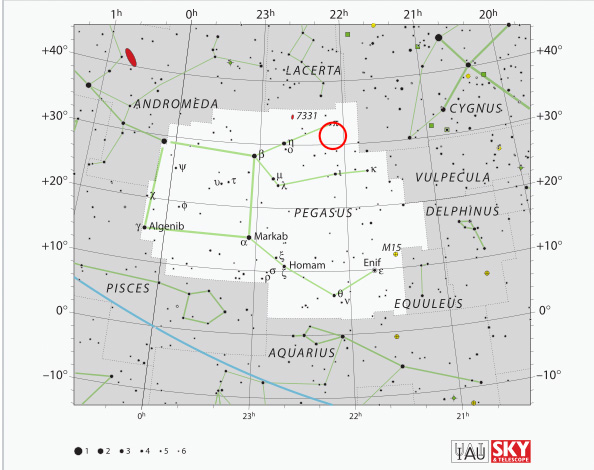
NGC 7217

Other: 

Peg

Coordinates AR: 22h 07m 52.4s, +31°21′ 33″
Optics Officina Stellare 10" f8 Richtey-Cretien
Camera-Mount SBIG ST10XME - ZWO ASI 1600M (ONAG)- 10Micron GM2000 QCI Mount
Filters Astrodon Gen. II - LRGB
Exposure
  • Luminance
  • Red
  • Green
  • Blue
  • 15 x 900 sec - 3 hours 45min
  • 9 x 900 sec - 2 hours 15min
  • 9 x 900 sec - 2 hours 15min
  • 9 x 900 sec - 2 hours 15min
  • UNBINNED
  • BINNING 2x2
  • BINNING 2x2
  • BINNING 2x2
Location / Date Promiod (Valle D'Aosta-Italy) "TLP" Remote Observatory - Sept 2023
Seeing 3" @ 0.7 arcosec/pixel unbinned
Note  
Acquisition N.I.N.A.
Processing Adobe Photoshop CC -
Comment


NGC 7217 is a spiral galaxy in the constellation Pegasus, about 50 million light-years away.
NGC 7217 is a gas-poor system whose main feature is the presence of several concentric rings of stars in its nucleus: three are the main ones, the outermost of which is the richest in gas and the one that hosts the greatest number of episodes of star formation, to which are added others, more internal to the first three, discovered by the Hubble Space Telescope. This suggests that the central regions of NGC 7217 have undergone several starbursts.
Another noteworthy feature is the presence of a certain number of stars rotating around the nucleus of the galaxy in the opposite direction to most of the others, and of two distinct stellar populations: one of intermediate age in the innermost regions, a younger but poorer in metals towards the outside.
These features are thought to have been caused by a merger with another galaxy, and indeed computer simulations show that NGC 7217 may have been a large lenticular galaxy that merged with one or two smaller gas-rich galaxies to form the spiral galaxy we see today. This galaxy currently sits alone in space, with no significant companions nearby.