Click on the image for FULL RES |
||||
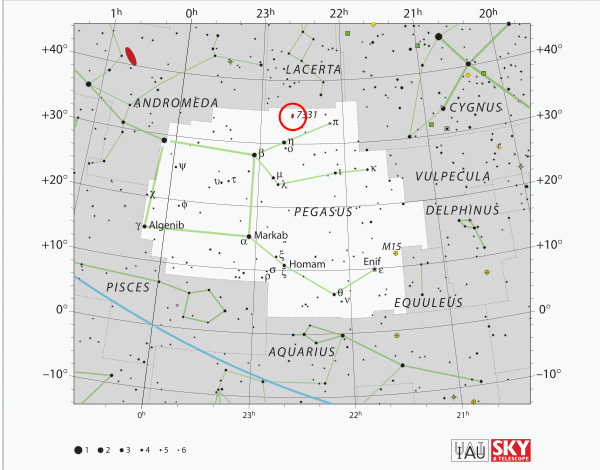
| Name / Constellation | NGC 7331 |
Other: C 30, UGC 12113, MCG+06-49-045, H I-53, h 2172, GC 4815, CGCG 514.068, PGC 69327 | Peg |
|
| Coordinates | AR: 22h 37m 04,1s - Dec: +34° 24′ 56″ | |||
| Optics | Richtey-Chretien Officina Stellare 10"@F8 Carbon Truss | |||
| Camera-Mount | SBIG ST10XME/CFW10 - ZWO ASI1600MM guider (ONAG) - 10Micron GM2000 QCI Mount | |||
| Filters | Astrodon LRGB TruBalance (Gen 2) | |||
| Exposure |
|
|
|
|
| Location / Date | Promiod (Valle D'Aosta-Italy) "TLP" Remote Observatory - Aug 2023 | |||
| Seeing | About 2.5 " - 0.71 arcosec/pixel image scale unbinned | |||
| Note | ||||
| Acquisition | N.I.N.A. | |||
| Processing | Adobe Photoshop CS5 -  |
|||
| Comment |
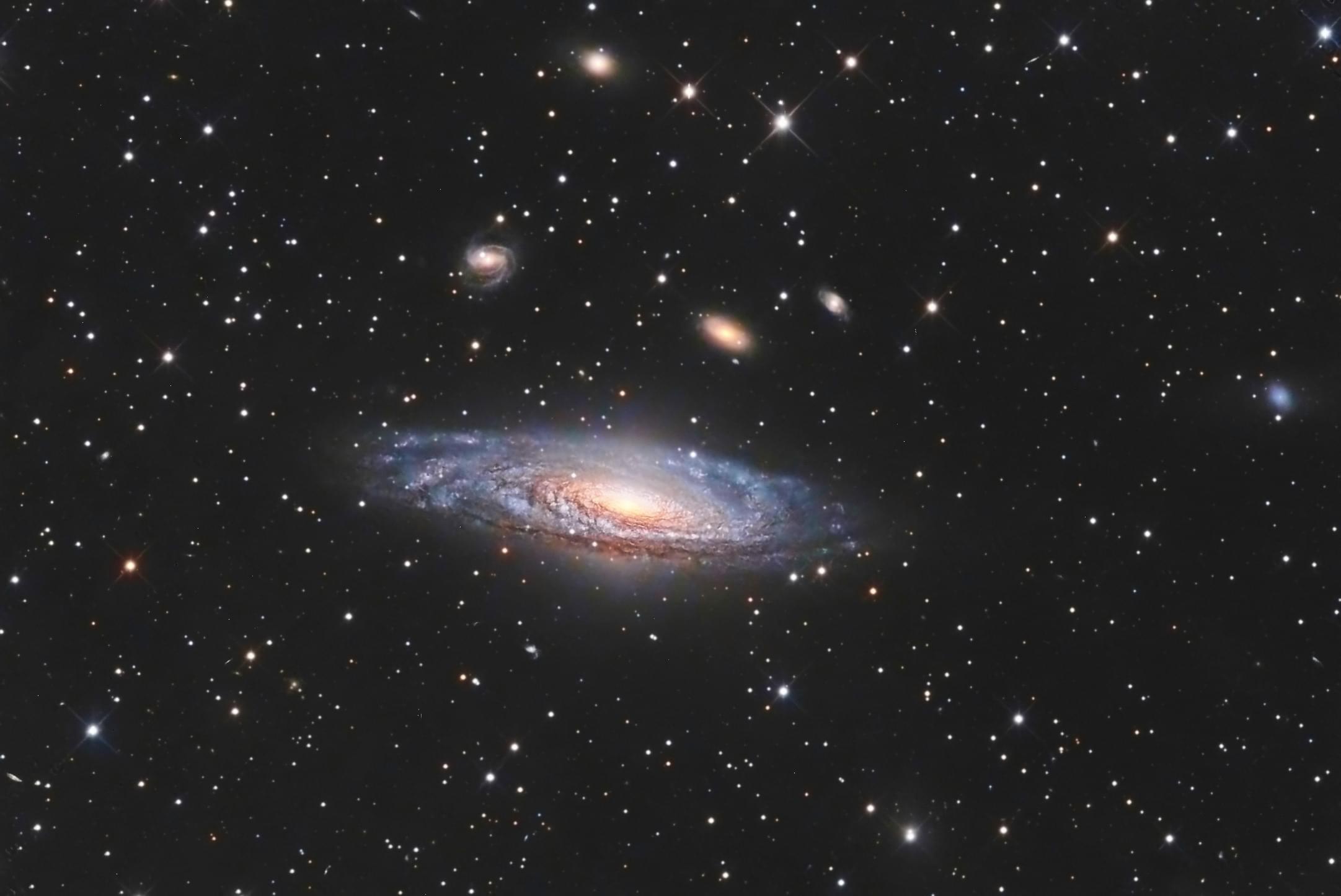
NGC 7331 (also known as C 30) is a spiral galaxy visible in the constellation of Pegasus.
|
|||