Click on the image for FULL RES |
||||
| Name / Constellation | NGC 772 |
Other: UGC 3809, MCG +13-06-006, PGC 21033 | Ari |
|
| Coordinates | AR: 01h 59m 19,6s - Dec: +19° 00′ 27″ | |||
| Optics | Officina Stellare 10" f8 Richtey-Cretien | |||
| Camera-Mount | SBIG ST10XME/CFW10 - ZWO ASI1600MM guider (ONAG) - 10Micron GM2000 QCI Mount | |||
| Filters | Astrodon Gen. II - LRGB | |||
| Exposure |
|
|
|
|
| Location / Date | Promiod (Valle D'Aosta-Italy) "TLP" Remote Observatory - 28/30 dec 2021 | |||
| Seeing | 2.3" @ 0.7 arcosec/pixel unbinned | |||
| Note | ||||
| Acquisition | MaxIm DL - CCD Autopilot5 - CCDCommander | |||
| Processing |  |
|||
| Comment |
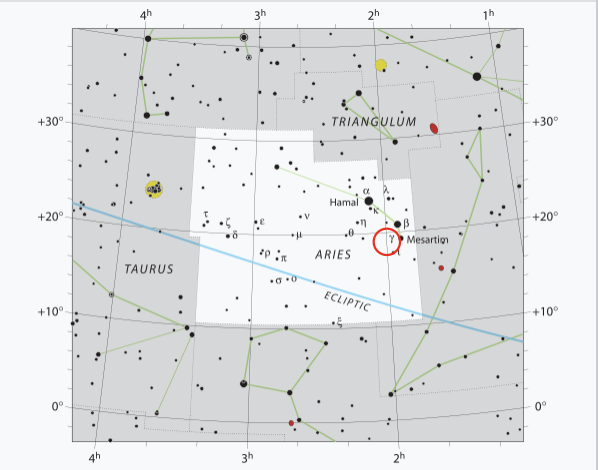
NGC 772 (also known as Arp 78) is an unbarred spiral galaxy approximately 130 million light-years away in the constellation Aries. At around 200,000 light years in diameter, NGC 772 is somewhat larger than the Milky Way Galaxy and is surrounded by several satellite galaxies – including the dwarf elliptical, NGC 770 – whose tidal forces on the larger galaxy have likely caused the emergence of a single elongated outer spiral arm that is much more developed than the others arms. Halton Arp includes NGC 772 in his Atlas of Peculiar Galaxies as Arp 78, where it is described as a "Spiral galaxy with a small high-surface brightness companion". Two supernovae, SN 2003 hl (discovered August 20, 2003) and SN 2003 iq (discovered October 8th, 2003), have been observed in NGC 772. Both were Type II. NGC 772 probably has a H II nucleus, but it may be a transitional object
|
|||